In fashion, some designs are recognizable before we see the logo.
A distinctive silhouette, a consistent aesthetic or a particular creative attitude can make a product feel connected to a brand almost immediately.
Beauty brands have the same opportunity with false lashes.
Instead of building a collection around products that already exist in the market, a brand can develop its own visual identity through the way its lashes look, feel and express beauty.
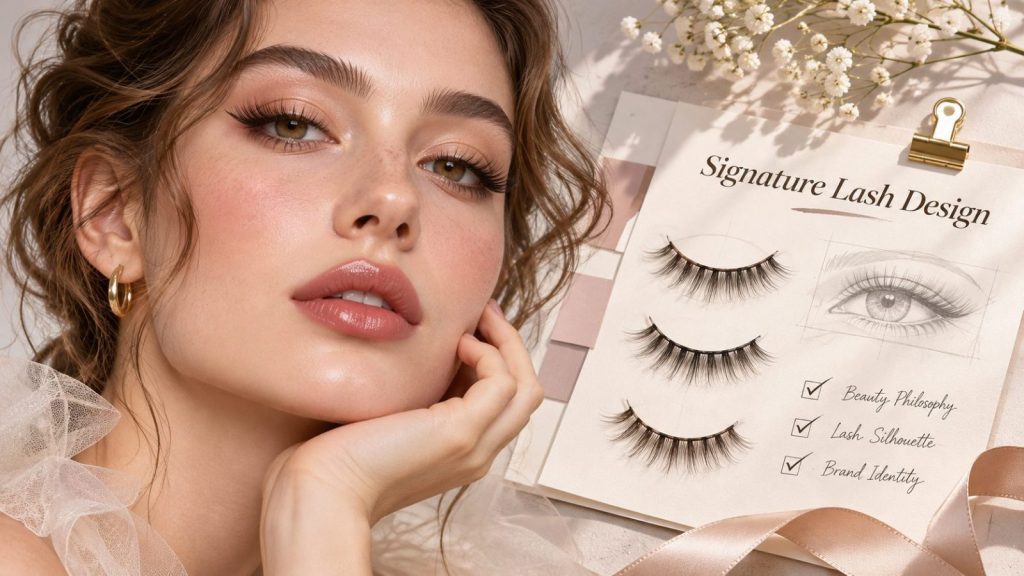
This is the idea behind signature lash design.
A signature lash design is more than a popular style or a recognizable packaging concept. It is a consistent creative direction that helps customers associate a particular lash aesthetic with a particular brand.
For beauty brands looking to develop a stronger identity, the question is no longer simply, “Which lashes should we sell?”
A more valuable question is: “What should our brand’s lashes look like, and why should customers recognize them as ours?”
1. From Selling Lashes to Creating a Beauty Identity
Many beauty brands begin by selecting products that already perform well in the market.
That approach can help establish an initial collection, but it does not automatically create a distinctive brand.
When multiple brands offer visually similar products, differentiation may depend heavily on packaging, promotional content or pricing.
A design-led brand starts from another perspective.
It considers how its products should express the brand’s personality, aesthetic preferences and understanding of beauty.
The lashes become part of the brand identity rather than interchangeable products carrying different labels.
This change in thinking is important for companies that want to build long-term recognition instead of competing primarily through product availability.
2. What Is a Signature Lash Silhouette?
A silhouette is the overall visual impression of a design.
In fashion, silhouettes help distinguish different creative identities. The same principle can apply to eyelashes.
A recognizable lash silhouette is not necessarily the most dramatic or unusual design.
It is an aesthetic that appears intentional, consistent and connected to the brand.
For example, a brand might develop a visual language associated with:
- understated elegance;
- soft, expressive beauty;
- modern minimalism;
- romantic femininity;
- editorial confidence;
- sculptural sophistication;
- contemporary glamour.
These are creative directions, not fixed product specifications.
Two brands may both describe their aesthetic as “natural,” yet express that idea in completely different ways.
One may interpret natural beauty through restraint and simplicity. Another may emphasize softness, movement and emotional expression.
The distinction comes from the brand’s creative decisions, not the category name.
3. Why Recognizable Design Matters More Than Following Every Trend
Beauty trends can inspire new ideas, but trends alone are not a complete brand strategy.
If a company changes its entire aesthetic whenever a new style attracts attention, customers may find it difficult to understand what the brand represents.
That does not mean brands should ignore fashion movements.
It means trends should be interpreted through an existing creative identity.
A brand known for quiet elegance might interpret a dramatic trend in a more restrained way.
A brand known for experimental beauty might transform the same inspiration into a more expressive visual concept.
Both brands can respond to the cultural moment without abandoning their identities.
The goal is not to reproduce every trend. It is to develop a recognizable point of view about beauty.
4. A Signature Design Begins with a Clear Beauty Philosophy
Before developing a recognizable visual identity, a brand should define the kind of beauty it wants to represent.
Some brands celebrate individuality and creative freedom.
Others emphasize sophistication, confidence, simplicity or personal expression.
These values can influence the visual direction of a lash collection.
A useful creative brief might explore questions such as:
- What emotions should customers associate with the brand?
- What makes its beauty perspective different?
- Should the aesthetic feel timeless or experimental?
- How does the brand interpret elegance, confidence or femininity?
- What visual qualities should remain recognizable across future collections?
The answers help establish creative boundaries.
These boundaries do not restrict innovation. They provide a foundation that makes innovation feel coherent.
5. The Difference Between a Popular Style and a Design Identity
A popular lash style can be sold by many companies.
A design identity should be more closely associated with the brand that develops and consistently expresses it.
Consider the difference:
| Popular Product Thinking | Signature Design Thinking |
|---|---|
| What is currently popular? | How does our brand interpret beauty? |
| Which appearance should we follow? | Which aesthetic can become recognizable as ours? |
| How can we offer more choices? | How can we build a coherent design identity? |
| How can we respond to the next trend? | How can we evolve without losing our identity? |
| What makes the product attractive today? | What makes the brand memorable over time? |
These approaches are not mutually exclusive.
A brand can participate in current trends while developing a stronger design identity.
The difference is whether its creative direction is determined entirely by external trends or guided by its own perspective.
6. Design Consistency Does Not Mean Every Lash Should Look the Same
A recognizable brand needs consistency, but consistency is not the same as repetition.
Fashion houses can create different collections while maintaining a recognizable creative identity.
Beauty brands can take inspiration from this principle.
Different lash collections may express different moods, occasions or artistic inspirations while still sharing a common design philosophy.
For example, a brand centered on modern elegance could explore:
- quiet everyday sophistication;
- romantic evening beauty;
- minimalist editorial styling;
- expressive special-occasion looks.
These concepts do not need to look identical.
They need to feel connected.
Over time, this can help the brand develop a more recognizable creative world.
7. The Role of Creative Direction in Lash Innovation
Product innovation is often discussed in terms of new materials, new structures or new application methods.
These may be important, but innovation can also begin with a new interpretation of beauty.
A creative team might challenge assumptions such as:
- Does a more luxurious lash always need to look more dramatic?
- Can subtlety become a stronger expression of confidence?
- Can a lash design communicate an artistic mood rather than simply add volume?
- Can softness and visual definition coexist?
- What would make an eyelash aesthetic feel distinctive rather than familiar?
These questions do not produce immediate technical specifications.
They establish a direction for creative exploration.
That direction can later guide product development, visual presentation and collection storytelling.
8. The Relationship Between Lash Design and Fashion
False lashes are often treated primarily as makeup accessories.
But they can also be understood as part of personal styling and visual expression.
Just as clothing, jewelry and hairstyles contribute to an overall look, eyelashes influence how an aesthetic is perceived.
This creates opportunities for brands to explore ideas inspired by fashion, art, photography and contemporary beauty culture.
Potential creative territories include:
- architectural minimalism;
- romantic softness;
- modern editorial beauty;
- understated luxury;
- expressive femininity;
- individualistic styling.
The goal is not simply to borrow fashion terminology.
It is to translate a meaningful creative idea into a coherent beauty expression.
A sophisticated design identity should remain understandable even when the original source of inspiration is no longer visible.
9. Why High-End Beauty Brands Need More Than Premium Packaging
Premium packaging can influence first impressions.
However, packaging alone does not establish a distinctive product identity.
If the product inside looks interchangeable with many alternatives, a luxurious box may not be enough to support long-term differentiation.
A design-led brand should consider the relationship between:
- its creative philosophy;
- its product aesthetic;
- its visual communication;
- its packaging;
- its customer experience;
- its overall brand positioning.
These elements should reinforce one another.
Luxury is not simply the appearance of being expensive.
It can also be expressed through creative clarity, thoughtful restraint, consistency and attention to the overall experience.
10. Originality Is a Process, Not Just a Marketing Claim
Words such as “original,” “exclusive” and “innovative” are easy to use in marketing.
Building a genuinely differentiated design direction requires more than those descriptions.
Original design begins with developing a creative point of view, exploring alternatives and making intentional choices.
It may involve studying existing beauty aesthetics to understand which visual ideas are already common and where meaningful differences may be possible.
It also requires critical evaluation.
Not every new idea is automatically better, and not every unusual appearance is suitable for a brand.
The objective is to develop a design that feels distinctive while remaining connected to the brand’s identity and intended audience.
Brands interested in the broader distinction between inspiration and imitation can also read our guide on developing a custom lash product without simply copying another brand.
11. How Can Beauty Brands Build a Long-Term Design Language?
A signature design language is rarely established through one isolated launch.
It becomes clearer through consistent creative decisions over time.
Brands can approach this as an evolving identity:
Define the Creative Point of View
Clarify the aesthetic values and emotional qualities the brand wants to express.
Develop a Recognizable Visual Direction
Explore how those values could become visible through the overall appearance and styling of lashes.
Evaluate Whether the Identity Feels Distinctive
Consider whether the concept stands apart from familiar alternatives and whether customers could eventually associate it with the brand.
Build Coherence Across Collections
Allow individual collections to express different ideas while preserving a recognizable creative foundation.
Continue to Evolve
Respond to new cultural influences without allowing every passing trend to redefine the entire brand.
This approach encourages brands to think about creative continuity rather than treating each launch as an unrelated product introduction.
12. From Product Supplier to Creative Development Partner
As beauty brands place greater emphasis on differentiation, the role of their development partners can also change.
A traditional sourcing relationship often begins with an existing product reference and focuses on reproducing an agreed appearance.
A design-led relationship can begin earlier, with questions about the brand’s vision, aesthetic identity and intended customer experience.
The discussion becomes less about selecting from a catalog and more about translating an idea into a distinctive beauty direction.
This does not eliminate the importance of production.
It changes the role production plays.
Production becomes a way to realize a creative vision rather than the starting point of the brand’s identity.
For established beauty companies, this perspective may help support more coherent long-term collections and stronger creative differentiation.
13. The Future of Lash Brands Is Not Only About More Styles
A broader product range does not automatically create a stronger brand.
In a competitive beauty market, the ability to express a recognizable creative identity can be just as important as offering many options.
Brands that develop a consistent aesthetic may find more opportunities to create meaningful collections, communicate a distinctive perspective and build recognition.
This does not mean every brand must become a fashion house.
It means eyelash design can be approached with the same seriousness given to other areas of beauty and fashion design.
Rather than asking only what customers are buying today, brands can begin asking what kind of beauty they want to introduce tomorrow.
14. Pingdu Lashes: A Design-Led Perspective
At Pingdu Lashes, we believe that the long-term value of an eyelash brand should come from more than product availability.
Design thinking, aesthetic identity and thoughtful product development can help beauty brands move beyond interchangeable collections.
Our direction is to place greater emphasis on lash design, creative exploration and the development of distinctive beauty concepts.
We believe the next opportunity for eyelash brands is not simply to introduce more styles, but to establish clearer ideas about what their products should represent.
For beauty brands exploring a more design-led approach, learn more about Pingdu Lashes’ custom development services or contact our team to discuss your creative direction.
Frequently Asked Questions
What is a signature lash design?
A signature lash design is a recognizable aesthetic direction that reflects a beauty brand’s creative identity. It is not limited to one specific style or product.
Why is a recognizable lash silhouette important?
A consistent visual identity can help customers distinguish a brand from alternatives and associate its products with a particular beauty perspective.
Does a signature design need to be dramatic?
No. Subtlety, elegance and simplicity can be just as distinctive when they are expressed through a coherent creative direction.
Can a lash brand follow trends and still maintain its identity?
Yes. A brand can interpret trends through its own design philosophy instead of changing its entire aesthetic with every new movement.
Is original lash design the same as developing unusual products?
Not necessarily. Originality involves intentional creative choices, meaningful differentiation and a clear connection to the brand’s identity.
How does a design-led lash development partner differ from a traditional supplier?
A design-led relationship places more emphasis on creative direction, brand identity and concept development before decisions about the final product are made.
Final Thoughts
A memorable lash brand is not built only by offering more products.
It can also be built by expressing a distinctive point of view.
A signature lash design gives that point of view a recognizable visual form.
For beauty brands ready to move beyond competing on assortment alone, developing a recognizable aesthetic may be an important step toward stronger long-term brand identity.
The future of lash design is not only about following beauty trends. It is also about having the creative confidence to define them.