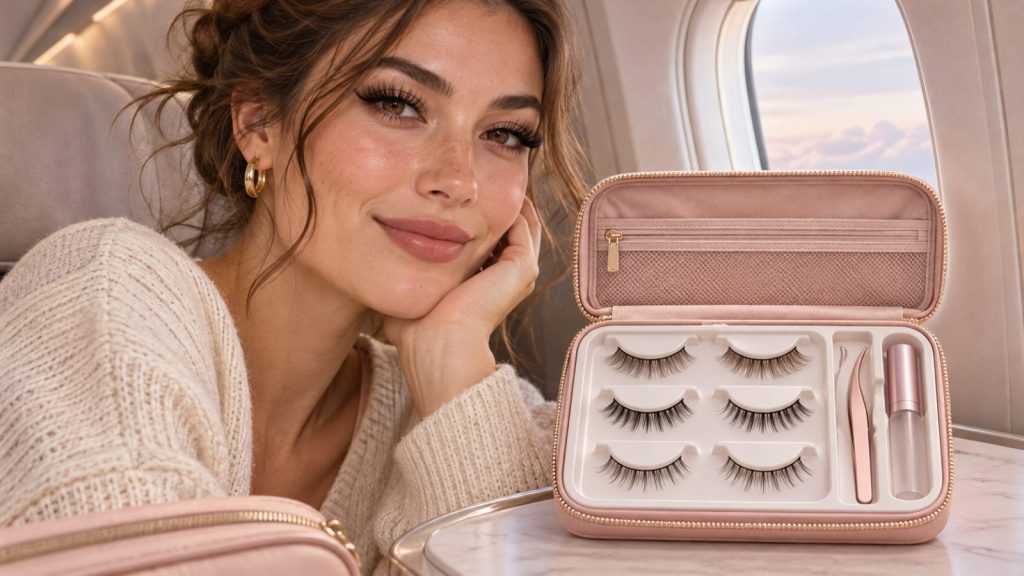
Travel changes the way customers use beauty products.
At home, a customer may have several lash styles, full-size packaging, separate tools and enough time to complete a full makeup routine. During a weekend trip, business trip or holiday, the same customer may want something very different: fewer products, simpler application and packaging that is easier to carry.
For beauty brands, this creates an opportunity to develop a travel-friendly false lash kit as a distinct product concept rather than simply placing a regular lash box inside a smaller carton.
A strong travel lash kit should balance four things:
- the right lash styles;
- a practical application system;
- compact but protective packaging;
- a clear reason for the customer to take the kit on a trip.
This guide looks at how beauty brands, wholesalers and private label buyers can plan a travel-friendly lash product that is compact without becoming confusing or incomplete.
What Makes a False Lash Kit Travel-Friendly?
Travel-friendly does not simply mean “small.”
A very small package can still be inconvenient if the customer needs several additional products to use it.
Likewise, a larger kit may still work well for travel if everything is organized clearly and the customer does not need to carry many separate items.
A practical travel lash kit should consider:
- how much space the product occupies;
- how many steps are required for application;
- whether the lashes are protected during transport;
- whether the customer can identify each style quickly;
- whether the kit works for more than one travel occasion;
- how easy it is to reopen and store after use.
The goal is to create a compact beauty product with a clear use case, not simply reduce the packaging size.
1. Start with the Travel Scenario
Before choosing the lashes, decide what type of trip the product is designed for.
Different travel situations can create different product requirements.
Weekend Trip
A short weekend trip may only require one or two versatile lash styles.
The customer may want something natural for daytime and a slightly more defined option for dinner or evening makeup.
Business Travel
A business-travel kit may focus more heavily on natural, lightweight and easy-to-wear styles.
The product does not necessarily need several dramatic options if the target customer mainly wants polished everyday makeup.
Holiday or Vacation
A holiday-focused kit can allow more variety.
For example, a brand might combine:
- a natural daytime style;
- a wispy evening style;
- a more defined cat-eye option.
Destination Wedding or Special Event Travel
Customers travelling for weddings or events may need lashes for several occasions across the same trip.
Brands developing this direction can also review our guide on building a bridal false lash collection.
Defining the scenario first makes the rest of the kit easier to plan.
2. Full Strip, Half Strip or 3/4 Strip?
The lash format can strongly affect how practical the kit feels.
A traditional full strip gives the customer a complete lash-line effect, but it is not the only option for a travel product.
Full Strip Lashes
Full strip lashes are familiar to most customers and can work well when the brand wants a complete eye look from one pair.
They may be suitable for:
- evening makeup;
- special occasions;
- customers already comfortable with strip lashes;
- kits where visual impact is more important than minimum size.
Half Strip Lashes
Half strip lashes focus mainly on the outer part of the eye.
For a travel collection, this format can be attractive because the product is visually compact and can create a more targeted outer-corner effect.
Brands can explore our Private Label Natural Half Strip Lashes as one possible product direction.
3/4 Strip Lashes
A 3/4 strip sits between a half strip and a full strip.
This can give brands another option for customers who want more coverage than a half lash without using a full-length band.
See our Private Label 3/4 Strip Lashes for another format that can be considered when planning a compact collection.
If your brand is still comparing formats, read our guide on half strip lashes vs. full strip lashes.
3. Should a Travel Kit Include One Style or Several?
A travel kit does not automatically need many lash styles.
Adding too many similar products can make the kit larger without adding much value.
Instead, each style should have a clear role.
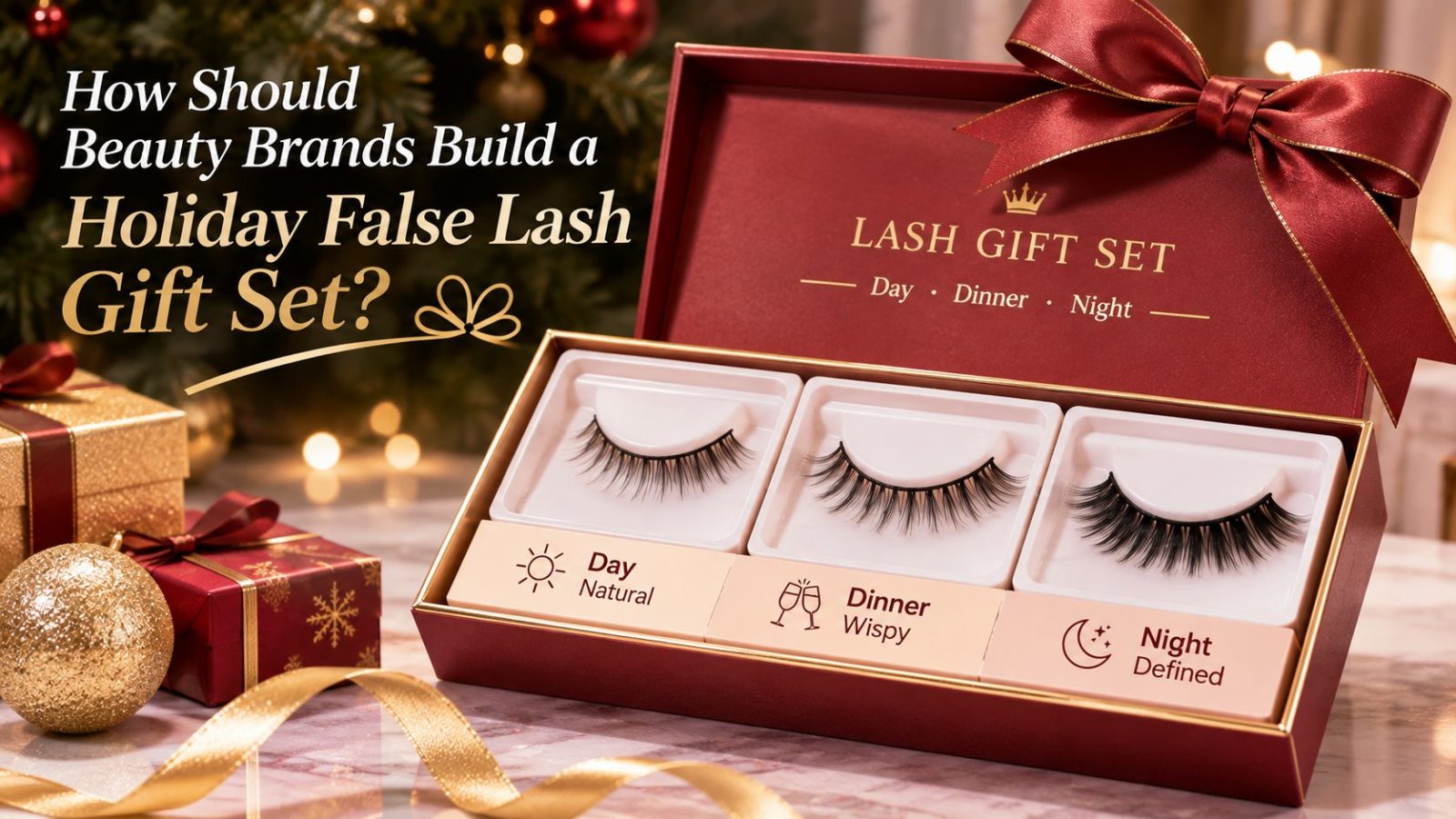
A simple three-look structure could be:
| Style | Possible Travel Use |
|---|---|
| Natural | Daytime, work, casual activities |
| Wispy | Dinner, photos, general evening makeup |
| Cat-Eye / Defined | Events, nightlife, stronger makeup looks |
A smaller kit might contain only two clearly differentiated styles.
The important point is that the customer should understand why each pair is included.
4. Consider Shorter and More Controlled Lash Styles
Travel products often benefit from versatility.
A very long or highly dramatic lash may work perfectly for one event but be less useful during the rest of a trip.
Brands can therefore consider styles with:
- controlled length;
- moderate density;
- soft wispy texture;
- natural outer-corner definition;
- lightweight visual effect.
This does not mean every travel kit must look natural.
A brand targeting nightlife, festivals or destination events can still build a more dramatic product.
The key is matching the lash intensity to the actual travel scenario.
5. Reduce Application Steps Where It Makes Sense
Convenience becomes more important when customers are away from their normal beauty setup.
This is one reason brands may consider simplified lash formats for a travel-focused product.
For example, Pre-Glued Half Strip Lashes can represent a different product direction from a traditional lash-and-glue system.
Brands developing DIY cluster products can also consider Pre-Glued Cluster Lashes when the target concept is built around fewer application steps.
Traditional adhesive systems and pre-glued systems should be treated as different product formats rather than assumed to offer the same customer experience.
Physical sample testing is important before deciding which system fits the travel concept.
6. If Adhesive Is Included, Treat It as a Separate Product Decision
A lash kit that includes adhesive requires more planning than a kit containing lashes alone.
Brands should evaluate the adhesive separately for:
- compatibility with the selected lashes;
- packaging and sealing;
- application method;
- customer instructions;
- storage requirements;
- the regulations and transport requirements of the target market.
Travel rules for liquids and cosmetics can vary by destination and transport method, so brands should not build a travel claim around assumptions that apply only in one market.
If the main objective is simplicity, a brand may decide that a pre-glued format communicates the travel benefit more clearly.
7. Protect the Lash Shape During Travel
Compact packaging should not sacrifice product protection.
A lash can lose its intended presentation if the fibers are pressed, bent or moved inside the package.
When developing travel packaging, brands should consider:
- how securely the lash sits on the tray;
- whether the tray protects the curl and shape;
- whether the package can be reopened safely;
- whether multiple pairs remain separated;
- whether the packaging is strong enough for normal handling inside a makeup bag or luggage.
The most compact package is not automatically the best package.
It should still protect the product customers paid for.
8. Make the Packaging Easy to Reopen and Organize
Travel products are often opened more than once.
A customer may wear one pair on the first evening, another pair later in the trip and then store the remaining products until they return home.
This means packaging should be considered as a temporary storage system, not only as a retail display.
Useful design questions include:
- Can the customer reopen the package easily?
- Do the lashes stay organized after opening?
- Can different styles still be identified?
- Is the tray easy to place back into the box?
- Does the packaging remain reasonably protected inside a travel bag?
Brands can discuss these requirements during their private label packaging development.
9. Do Not Overload the Kit with Too Many Accessories
A travel kit can become less convenient when too many components are added.
Every accessory should have a clear purpose.
Depending on the concept, the kit may include or be designed around items such as:
- lash pairs;
- an applicator;
- adhesive;
- a compact mirror;
- application instructions;
- a reusable storage case.
However, more components also mean:
- more packaging space;
- more sourcing and assembly steps;
- more items that must be quality checked;
- potentially more complicated labeling and compliance requirements.
A focused kit with fewer well-chosen components may provide a clearer product proposition than a large kit filled with extras.
10. Consider a Day-to-Night Travel Kit
One strong concept is a day-to-night kit.
Instead of including several variations of the same look, the brand can create a clear progression.
For example:
- Day: lightweight natural lash;
- Dinner: soft wispy lash;
- Night: defined cat-eye or fuller style.
This structure is easy to communicate on packaging and gives the customer a reason to use more than one pair during the trip.
A product such as Private Label Cat Eye Strip Lashes could represent the more defined end of a collection, while softer strip or half-strip styles can serve the daytime position.
11. Another Option: One Versatile Style in Multiple Pairs
Not every travel kit needs variety.
For some brands, the stronger concept may be several pairs of the same reliable everyday lash.
This can work when the target customer already knows the style and wants a simple travel supply.
Possible advantages include:
- easy product understanding;
- consistent makeup look throughout the trip;
- simpler inventory planning;
- less need to explain multiple styles.
The decision between mixed styles and repeated styles depends on the customer and brand positioning.
12. Think About Reusability Carefully
Reusable lashes can be attractive for travel because customers may want to carry fewer products.
However, brands should avoid promising a fixed number of wears unless that claim is supported by actual product testing and realistic care conditions.
Reusability can depend on:
- band construction;
- how the product is removed;
- how adhesive residue is handled;
- how the lash is stored;
- customer care habits.
If reusability is part of the travel positioning, care instructions and packaging should support that use case.
13. Make the Kit Easy to Understand at First Glance
A travel kit often competes for limited space in a customer’s luggage and limited attention on a retail shelf or ecommerce page.
The customer should quickly understand:
- how many lash looks are included;
- which style is for which occasion;
- whether adhesive is required;
- whether the product is pre-glued;
- whether accessories are included;
- how the lashes should be stored after opening.
Clear product naming can help.
Instead of labeling three products only as Style A, B and C, the brand might communicate their intended role more clearly, such as Natural Day, Soft Evening and Defined Night.
14. Test the Complete Kit, Not Only the Lashes
When developing a private label travel product, individual lash quality is only part of the final customer experience.
The brand should evaluate the complete assembled kit.
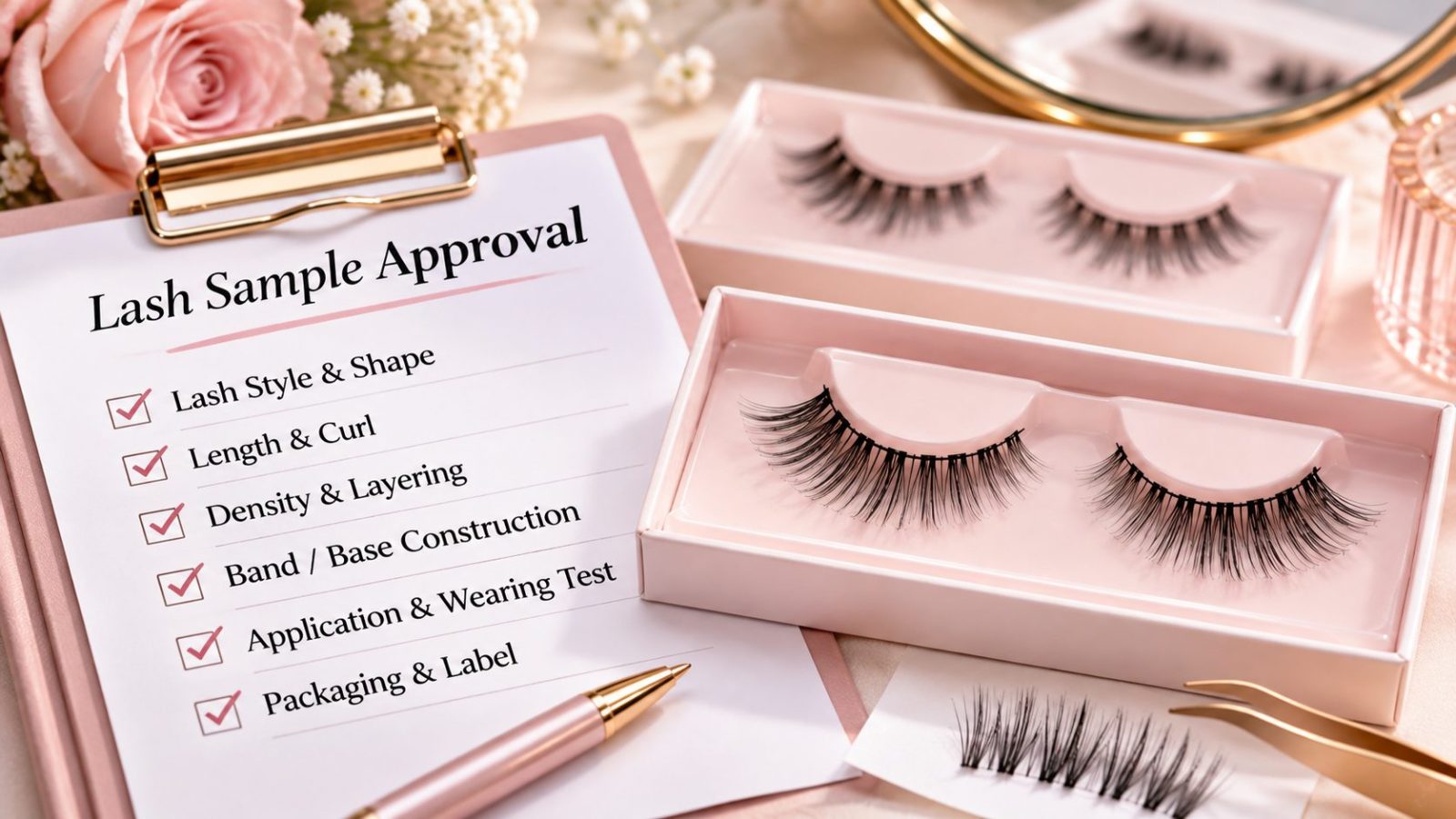
A practical sample review may include:
| Area | What to Check |
|---|---|
| Lash Styles | Are the included styles clearly different and useful for the target trip? |
| Application | Can the customer use the product with a practical number of steps? |
| Tray | Are the lashes protected and easy to remove? |
| Packaging Size | Is it compact without damaging the product? |
| Reopening | Can the package be opened and closed during the trip? |
| Style Identification | Can the customer quickly identify different lash looks? |
| Accessories | Does every included item have a useful purpose? |
| Branding | Does the product still look consistent with the main brand collection? |
The complete kit should be approved before bulk production, especially when several products and packaging components are assembled together.
15. Common Mistakes When Developing a Travel Lash Kit
Making the Package Smaller Without Changing the Product
A smaller box does not automatically create a better travel experience.
Including Too Many Similar Lash Styles
If every pair looks almost the same, the customer may not see the value of a multi-style kit.
Choosing Only Dramatic Styles
This can limit how often the customer can use the kit during one trip unless the target market specifically wants dramatic looks.
Ignoring Storage After Opening
A package designed only for the retail shelf may become inconvenient once the customer begins using it.
Adding Accessories Without Testing the Full System
Every additional component changes the user experience and should be tested as part of the finished kit.
Making Unsupported Travel or Reusability Claims
Claims should match the actual product, packaging and target-market requirements.
16. How Can Private Label Brands Build Different Travel Lash Collections?
The same travel concept can be developed in several directions.
Minimalist Weekend Kit
- one natural style;
- one defined style;
- compact protective packaging.
Half-Lash Travel Kit
- natural half strip;
- wispy half strip;
- cat-eye half strip.
Day-to-Night Strip Lash Kit
- natural daytime pair;
- soft wispy pair;
- defined evening pair.
Pre-Glued Convenience Kit
- pre-glued lash format;
- simple style selection;
- focus on fewer application steps.
Destination Event Kit
- event-ready lash options;
- different looks for several occasions;
- more premium presentation.
The strongest direction depends on who the customer is and why they are travelling.
17. Questions Buyers Should Answer Before Developing the Kit
Before requesting samples, beauty brands can prepare a simple product brief.
- Who is the target customer?
- What type of trip is the kit designed for?
- How many lash looks should be included?
- Should the kit use full strips, half strips, 3/4 strips or another format?
- Does the customer need adhesive?
- Would a pre-glued format fit the concept better?
- Should the styles be natural, wispy, cat-eye or mixed?
- Does the package need to be reopened and reused?
- Are accessories necessary?
- What level of packaging customization is required?
Answering these questions before sampling can make product development more focused.
18. Develop a Travel-Friendly Lash Kit with Pingdu Lashes
Pingdu Lashes works with beauty brands, wholesalers and distributors developing private label false lash products and collections.
For a travel-focused project, buyers can provide:
- target customer;
- preferred lash format;
- reference styles;
- number of lash looks;
- packaging concept;
- estimated quantity;
- brand artwork requirements;
- any required application system or accessories.
The lash styles, tray structure and packaging direction can then be reviewed through samples before bulk production.
Browse our wholesale and private label eyelash range or learn more about our custom eyelash and private label services.
Frequently Asked Questions
What type of lashes are best for a travel lash kit?
There is no single best format. Full strips, half strips, 3/4 strips and simplified pre-glued products can all work depending on the target customer and travel scenario.
How many lash styles should a travel kit include?
The kit should include enough variety to create a clear benefit without adding unnecessary similar styles. Two or three differentiated looks can be a practical direction for many concepts, but the final assortment should be based on the target market.
Are half lashes suitable for travel kits?
They can be. Half strip lashes provide a compact product format and can be developed for natural, wispy or more defined outer-corner effects.
Should a travel lash kit include glue?
That depends on the product concept. If adhesive is included, brands should evaluate the complete system, packaging, instructions and relevant target-market requirements.
Can a brand make a pre-glued travel lash kit?
Yes. Pre-glued formats can be considered when the product concept focuses on reducing application steps. Physical sample testing should confirm the actual customer experience.
Can the packaging be customized?
Yes. Private label projects can discuss tray structure, outer packaging, brand logo, style naming, product information and other packaging requirements according to the project.
Final Thoughts
A successful travel-friendly false lash kit is not simply a smaller version of a regular lash product.
It should be designed around the way customers actually use beauty products away from home.
The strongest concepts usually combine a clear travel scenario, carefully selected lash styles, practical application, protective packaging and a product assortment that is easy to understand.
For beauty brands, this creates an opportunity to build a product with a specific reason to exist rather than adding another generic lash set to the collection.